
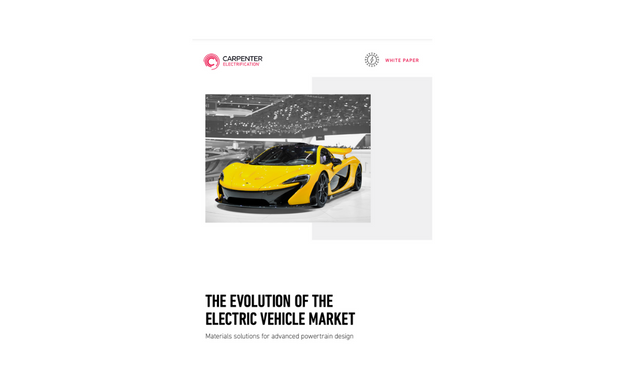
The Evolution of the Electric Vehicle Market
High-performance electric vehicles (EV) are growing in popularity. Models with more than 500 horsepower peak power are forecast to account for 13% of total EV sales by 2030. At least 14 new EV models with more than 700 horsepower are planned. Automotive manufacturers will adopt improved power and torque-dense, efficient, compact powertrain technology to meet the new requirements for these high-performance EVs.
In this white paper you will learn:
- How the advancement of technology over time has allowed for increased performance requirements
- Which electric motors were established first and how it's changed overtime
- What the future of electric vehicle design will look like
Download Whitepaper
Checking your access…
This resource is free. Register once with your work email and every resource on the site opens for you — there is no form to fill in per download.
Already have an account?
We’ve sent a 6-digit code to . It expires in 10 minutes and can be used once.
You are signed in, so this and every other resource is available without a form.
We couldn’t check your access just now. Please reload the page.
Improvement of Performance with Iron Cobalt Alloys
The soft magnetic stator and rotor iron play an important role in motor performance. Presently, nearly 3% silicon-containing soft magnetic non-grain oriented steel (NGOS electrical steel) of about 0.25–0.35 mm lamination thickness is most commonly used. Iron cobalt (FeCo) alloys demonstrate higher induction and enhanced permeability as compared to NGOS.